Water Tanker Rental for Construction Work: How to Avoid Supply Delays
A construction site can lose valuable working time when water is needed but unavailable. Water may be required for dust suppression, cleaning, concrete-related activities and other site operations. If tanker deliveries arrive late or the available volume is insufficient, planned work can be disrupted.
This makes water supply planning an operational issue rather than simply a procurement task. So, how can construction teams reduce the risk of water shortages and delivery delays?
Calculate Demand Before Booking
The first important step for you is to estimate how much water the site actually needs. Your requirement will depend on the size of the site, construction activities, weather conditions, dust control measures, equipment and the frequency of watering. A project with extensive exposed soil and vehicle movement may require more water for dust suppression than a smaller site.
Avoid estimating requirements only from the number of workers. Construction water demand is driven by activities and site conditions as much as workforce size.
Dubai construction requirements also place responsibility on contractors to comply with applicable safety rules and standards. Dubai's 2025 construction safety decree makes compliance with the Dubai Municipality Construction Safety Code mandatory for contractors and engineering consultants carrying out construction work.
Determine How Often You Need Deliveries
Knowing your overall water requirements is not sufficient. Think about the time when you will require your water and how frequently the water tanker would have to visit. The case may arise where you finish your available water early in the day while the next delivery is still far off.
Make your schedule for deliveries depending on how your consumption goes. It could be prudent for big projects to keep a reserve instead of operating the site using just what is necessary.
This helps safeguard yourself from traffic delays as well as any other uncertainties regarding consumption and activity levels at the site.
Choose the Right Tanker Capacity
A larger tanker is not automatically the best choice.
The appropriate capacity depends on your consumption, storage capacity, site access and delivery frequency. A tanker that is too small may require repeated trips, while a very large tanker may not be practical if the site has limited space or cannot safely accommodate it.
Before booking, check whether the tanker can reach the designated filling or discharge point without obstructing construction traffic.
Check the Supplier's Reliability
Pricing alone is not a sufficient criterion in selecting a supplier.
Inquire from potential suppliers regarding their availability of tankers, scheduling of deliveries, handling of urgent requests, and capacity to take additional loads in case you need more of their products due to increased consumption.
In addition, check whether the tanker is properly registered or licensed for the intended use. There may be regulatory requirements for the UAE depending on the water type being used and jurisdiction.
Separate Potable and Non-Potable Requirements
Not every construction activity requires drinking water.
Dust suppression and certain site activities need non-potable water where permitted, while workers need an adequate supply of potable drinking water. Dubai construction guidance distinguishes potable and non-potable water and requires appropriate measures to prevent contamination between the two systems.
Therefore, tell your supplier exactly what type of water you require instead of treating every tanker load as interchangeable.
Plan for Dust Suppression
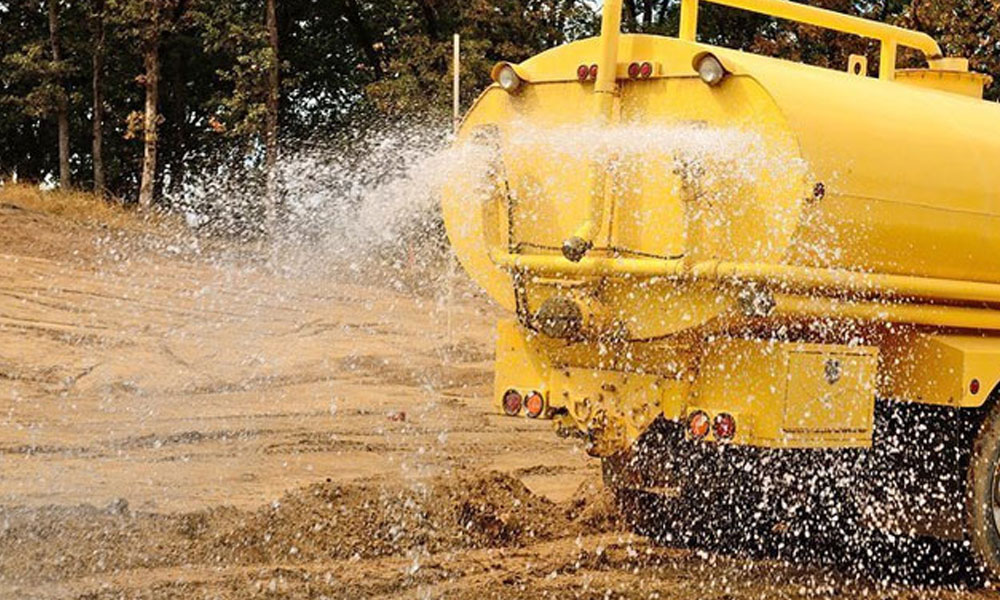
The use of construction equipment, excavation, grading, and transportation of soil and other loose materials may produce dust, especially when it comes to the exposed surface and unsealed site roads. A water tanker is used to control dust by sprinkling water over those surfaces in order to keep them wet enough to prevent the generation of dust.
Dust suppression is more effective if a water tanker is used in the areas where dust is produced. Focus should be made on haul roads, access roads, stockpiling sites, excavated areas, and other exposed surfaces with the presence of construction equipment movement.
In large areas, it should be coordinated with construction operations to make sure that areas with high traffic are watered before and during the period of increased movement of construction equipment.
Make Site Access Part of the Delivery Plan
A tanker cannot deliver water efficiently if it cannot safely reach the required location.
Before the first delivery, identify the entry route, discharge point, turning space and any restrictions caused by excavation, scaffolding, temporary structures or other equipment.
Also make sure someone is available to coordinate the delivery. A driver waiting for site clearance wastes time and can disrupt the delivery schedule.
Keep a Backup Plan
Even a reliable supplier can face unexpected delays.
For projects where water availability is critical, maintain an emergency contact, identify alternative tanker capacity and keep sufficient on-site storage to cover reasonable interruptions.
Make Water Supply Predictable
Reliable water availability starts with planning rather than last-minute bookings.
Estimate consumption, select an appropriate tanker capacity, schedule deliveries around site demand, verify the supplier's credentials and ensure the tanker can access the site safely.
If you are arranging water tank rental for construction in Dubai, choose a supplier that can match its delivery capacity and schedule to your project's actual requirements.
The good news for you is that you don’t need to go anywhere else because you have already come to the right place. Discuss your requirements, and we will ensure them to meet timely. For a discussion, call now at +971 50 795 9969.